How to Compare Hardscaping Quotes: What Should Actually Be Included?
Discover how to effectively compare hardscaping quotes by analyzing scope, materials, and essential project details.
When you get multiple quotes for a patio, retaining wall, walkway, or other outdoor project, it can be tempting to compare one number against another and choose the lowest price.
But hardscaping quotes aren't always comparing the same thing.
One contractor may include extensive excavation, proper base preparation, drainage, quality materials, and cleanup. Another quote may look less expensive simply because some of those details aren't included or aren't clearly explained.
So how do you actually compare hardscaping quotes?
Here are some of the most important things to look for.
1. Is the Scope of Work Clearly Defined?
A good quote should tell you what is actually being built.
For a paver patio, for example, you should be able to determine:
Approximate square footage
Paver manufacturer and product
Paver color and pattern
Border material
Excavation
Base preparation
Bedding material
Joint sand
Edging
Drainage, if needed
Cleanup
The more clearly the scope is defined, the easier it is to compare one proposal to another. A quote that simply says “Install 500-square-foot paver patio” doesn't tell you much about what you're actually getting.
2. What's Happening Underneath the Project?
This is one of the biggest things homeowners should pay attention to. The finished patio is what you see but the work underneath it is what helps it perform over time.
Ask each contractor:
How much material is being excavated?
What type and depth of base material will be installed?
Will geotextile fabric be used?
How will the base be compacted?
What bedding material will be used underneath the pavers?
These details can have a significant impact on the longevity and performance of a hardscape. A lower quote isn't necessarily a better deal if it comes with substantially less preparation.
3. Is Drainage Addressed?
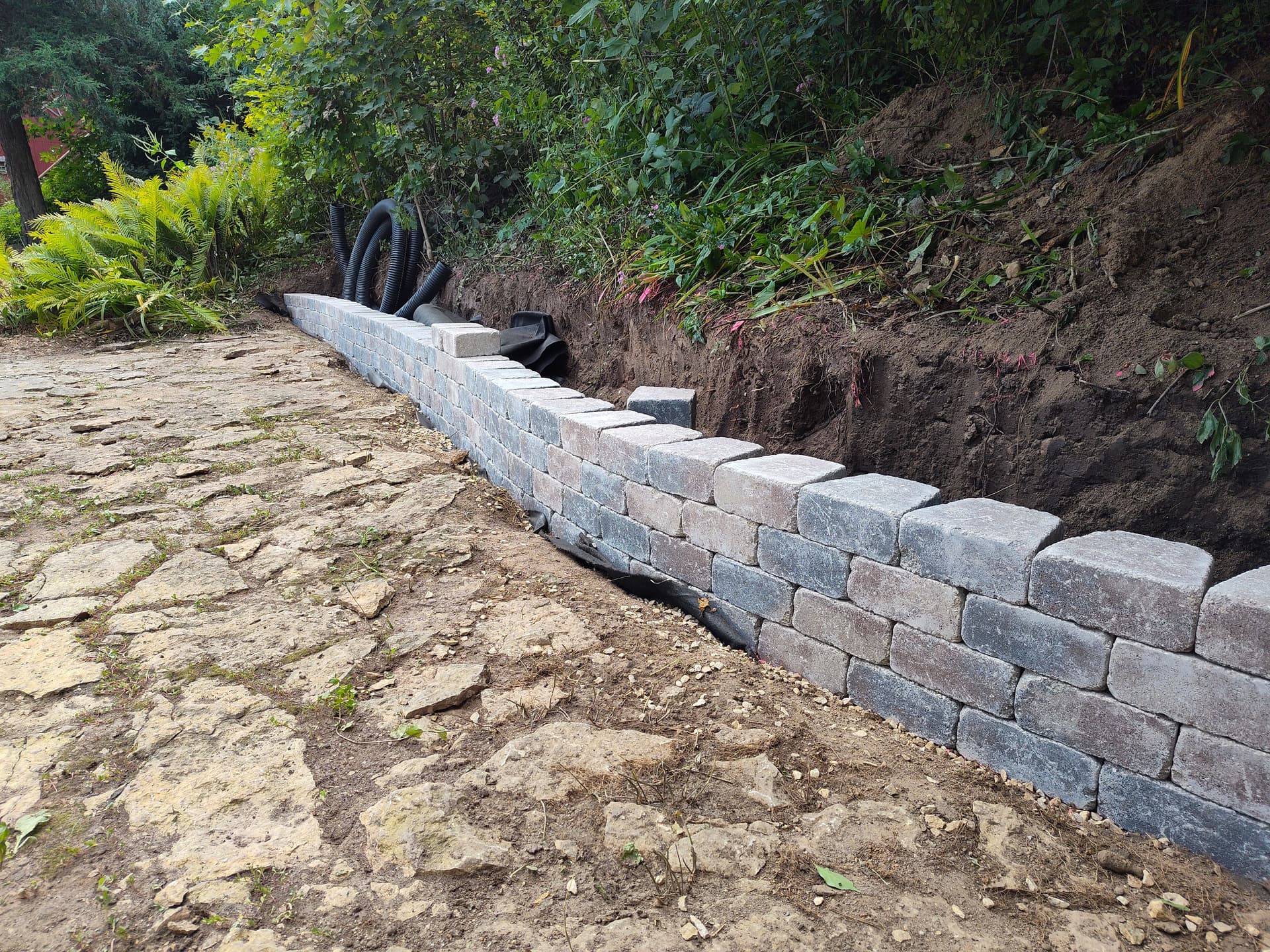
Water needs somewhere to go. Depending on the property, a project may require grading adjustments, drainage tile, a drainage layer, catch basins, or other water-management solutions. This is especially important in Minnesota, where freeze-thaw cycles can put additional stress on improperly constructed hardscapes. If one contractor discusses drainage and another doesn't, don't assume drainage isn't necessary. Ask why. A good contractor should be able to explain how water will move through and away from the project.
4. What Materials Are Being Used?
“Pavers” isn't a complete material specification. There are many manufacturers, products, colors, textures, thicknesses, and price points. Your quote should ideally identify the materials being proposed.
The same applies to:
Retaining wall block
Natural stone
Decorative rock
Edging
Joint sand
Base materials
If two quotes have significantly different material specifications, the price difference may make much more sense.
5. Does the Quote Include Excavation and Disposal?
This is another detail that's easy to overlook. Hardscaping often involves removing a significant amount of soil and existing material before construction can begin.
Ask:
How deep will the area be excavated?
Is excavation included?
Is hauling included?
Are disposal fees included?
A quote that doesn't clearly address excavation and disposal may not represent the final project cost.
6. How Will the Contractor Handle Access to Your Yard?
Getting equipment and materials to the work area can be a major part of a project.
Is there a wide gate?
Can machinery reach the backyard?
Will materials need to be moved by hand?
Will equipment travel over an existing lawn?
These factors can affect both the project cost and the potential for disruption to the property. It's also worth asking what measures the contractor takes to minimize damage to the surrounding yard during construction.
7. Are Site Conditions Accounted For?
Every property is different. A straightforward patio on a relatively flat, accessible yard is very different from a patio on a slope with difficult access and drainage challenges. A thorough quote should account for the actual conditions of your property—not just the square footage of the finished project. That's one reason it's important to be cautious when comparing quotes based solely on price per square foot.
8. What's Included in Cleanup?
Don't be afraid to ask what happens when the project is finished.
Does the contractor:
Remove construction debris?
Clean the new hardscape?
Remove excess soil and materials?
Restore disturbed areas?
Seed or repair affected lawn areas?
Complete a final walkthrough?
9. Is There a Warranty?
Ask what the contractor warranties and for how long.
Make sure you understand:
What's covered
How long it's covered
Whether materials and labor are both covered
What isn't covered
How warranty issues are handled
A professional contractor should be comfortable explaining their warranty rather than leaving you to figure it out after the project is complete.
10. Are You Comparing the Same Level of Work?
This is ultimately the biggest question. If one contractor quotes you $25,000 and another one quotes you $18,000, it doesn't necessarily mean that the cheaper contractor is giving you a better deal. Before comparing the numbers, compare the scope.
Look at: Materials → Excavation → Base → Drainage → Labor → Equipment → Cleanup → Warranty
If those things aren't comparable, the final prices aren't really comparable either.
The Lowest Quote Isn't Always the Lowest Cost
A properly constructed hardscape is an investment in your property. The goal shouldn't necessarily be finding the cheapest contractor. It should be finding a contractor who clearly explains what you're paying for, how the project will be constructed, and why those construction methods are appropriate for your property.