Block vs Boulder Walls
Discover the key differences between SRW and boulder retaining walls in Minnesota, including installation tips and common pitfalls.
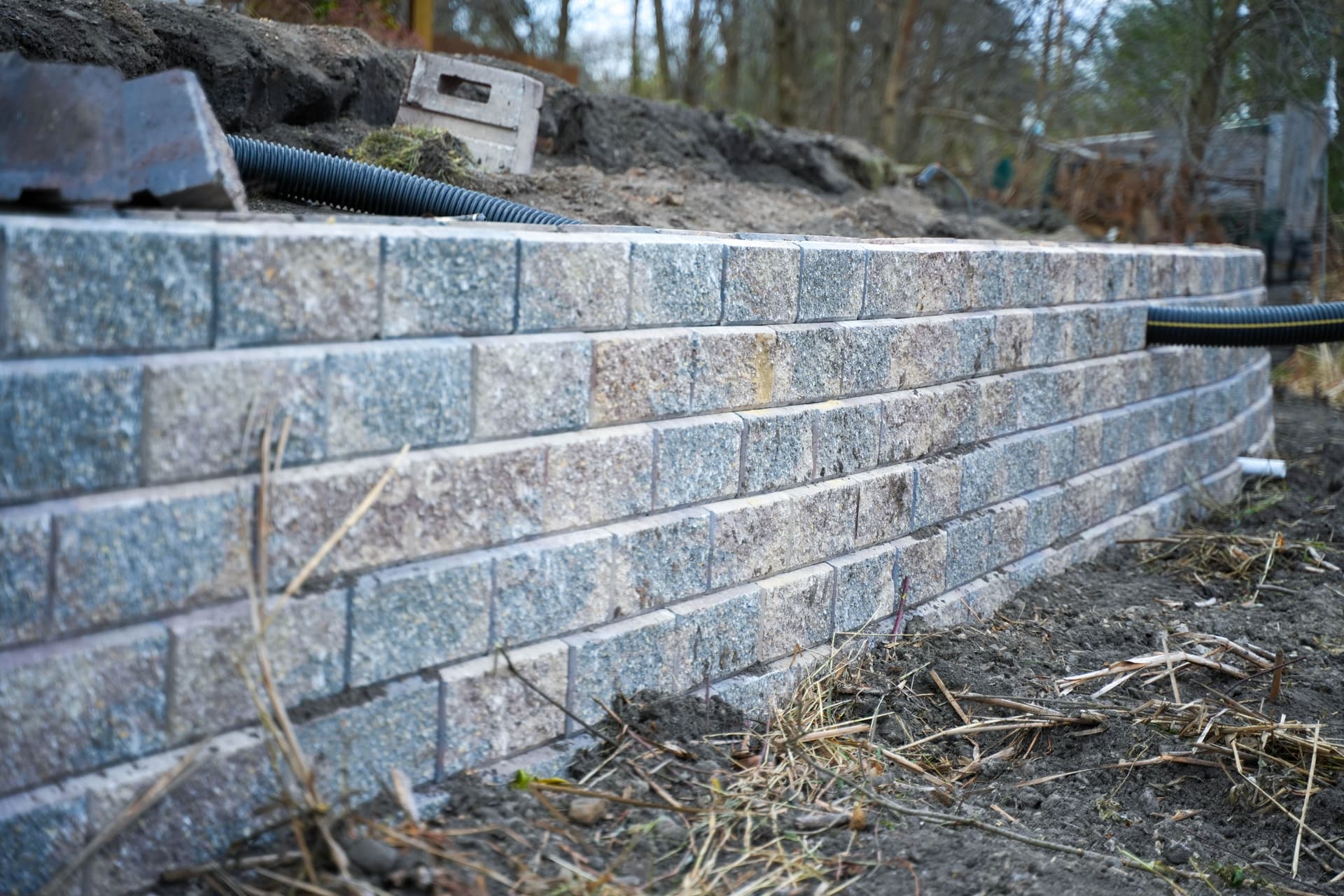
SRW vs Boulder Retaining Walls in Minnesota: The Bulletproof Guide for Woodbury, Afton, and White Bear Lake
If you live in Woodbury, Afton, or White Bear Lake, you already know the deal: slopes, water, and freeze thaw cycles do not care about your weekend plans. A retaining wall is either built right and lasts, or it slowly turns into an expensive, ugly problem.
Two of the most common options in our area are:
SRW (Segmental Retaining Wall): engineered concrete block systems with geogrid reinforcement.
Boulder retaining walls: large natural stone set with equipment, often with buried toe and proper drainage.
Both can be excellent. Both can fail hard if installed wrong. This post breaks down how to choose, what actually matters in Minnesota, and the questions homeowners keep asking before they commit.
Quick definition: What is an SRW wall?
An SRW wall is a wall built from interlocking concrete blocks designed to work as a system. The blocks, base stone, drainage, and often geogrid (reinforcement fabric) work together to resist soil pressure. Done right, SRW is an engineered solution with predictable performance.
Quick definition: What is a boulder wall?
A boulder retaining wall is built from natural boulders, typically granite in our region. The wall relies on the weight and interlock of large stones, plus proper base prep and drainage. Boulder walls can look incredibly natural and “Minnesota-native,” especially around wooded lots and lake-area homes.
The Minnesota factor: Why walls fail in Woodbury, Afton, and White Bear Lake
These are the most common reasons walls fail in our region:
Frost heave from poor base depth and bad drainage
Hydrostatic pressure because water gets trapped behind the wall
Underbuilt base (too shallow, wrong stone, soft subgrade not addressed)
No geogrid when the height or loads require it
Bad backfill (clay against the wall instead of clean, free-draining material)
No plan for water on sloped lots, downspouts, and hillside runoff
Afton hills and ravines, parts of Woodbury with newer grading and tight lots, and lake-adjacent or wet areas near White Bear Lake all magnify these issues. The right choice comes down to height, water, space, and the look you want.
SRW vs Boulder: The honest comparison
1) Strength and predictability
SRW wins when you want predictable performance, especially for taller walls or walls near structures.
SRW systems are designed to be reinforced with geogrid based on wall height, slope, and loads.
When engineered and installed correctly, SRW has a clear path to solving tough problems: tall walls, tight setbacks, driveways, patios, and stair transitions.
Boulder walls can be very strong, but performance depends heavily on stone size, placement skill, and the design approach. You do not get the same repeatable engineering options unless the contractor approaches it like a true retaining system with proper toe burial, batter, drainage, and often terracing.
Rule of thumb
If failure is not an option because of height, proximity to the home, or surcharges (driveway, pool, patio), SRW often becomes the safer bet.
2) Drainage and water pressure
This is where most walls die.
SRW typically uses:
Drain tile at the base
Washed rock behind the wall
Fabric separation where needed
Controlled outlets to daylight or a drywell solution
Boulder walls can drain well too if built right, but problems show up when:
Boulders are “stacked pretty” without a real drainage zone
Clay is packed behind the stones
No drain tile is installed
Water has nowhere to go
Bottom line
If your yard collects water, has heavy clay, or your wall is near a downspout runoff path, you need a drainage plan either way. Do not let anyone sell you “water will just run through it” as the entire plan.
3) Space, property lines, and setbacks
SRW wins when you have limited space.
SRW walls can be built more vertical while still being reinforced properly. This matters in Woodbury neighborhoods with smaller backyards, patio expansions, and tight lot lines.
Boulder walls often require more footprint to look and perform right:
Bigger stones
More toe burial
More setback (batter)
More room to maneuver equipment
If you are trying to maximize usable yard space, SRW is often the cleaner solution.
4) Height and terracing
Taller walls (or walls that need to hold back a lot of soil) usually push the decision toward SRW, especially if the wall needs engineering and reinforcement.
Boulder walls can handle height, but the smartest approach is often terracing:
Two shorter walls with a planted bench in between
Better aesthetics
Reduced pressure per wall
More forgiving in freeze thaw cycles
If you want a natural look but need significant grade change, ask about a terraced boulder design.
5) Aesthetics and “fit” with the property
This is subjective, but patterns show up:
Boulder walls shine in:
Afton wooded hillsides
Naturalized landscapes
Lake area homes and lots with mature trees
Projects where you want it to look like it has always been there
SRW walls shine in:
Clean, modern landscapes
Patio and stair builds
Formal planting beds
Tight, engineered spaces
Matching paver patios and outdoor living layouts
If you are already installing pavers, steps, caps, columns, lighting, and clean lines, SRW tends to look intentional and premium.
6) Maintenance and long-term performance
Both can last decades if built correctly.
SRW can be easier to keep crisp and consistent over time. Boulder walls can shift and still look acceptable because the look is organic, but that does not mean shifting is fine structurally.
The real deciding factor is not block vs stone. It is:
Base prep
Drainage
Reinforcement where needed
Proper backfill
Professional layout and compaction
7) Cost and value
Costs vary widely because the real cost driver is not just materials, it is:
Excavation and export
Base materials and compaction time
Drainage system and outlets
Access constraints
Wall height, length, curves, steps, corners
Engineering if needed
Permits and approvals (common in some situations)
In many cases:
SRW can be cost-effective for engineered height and tight spaces.
Boulder walls can be cost-effective when boulders are readily available and access is easy, but they can get expensive fast when equipment access is tight or stone size needs to increase.
If someone gives you a cheap retaining wall price without talking drainage and base depth, you are not getting a deal. You are getting a future repair.
Choosing the right wall: A simple decision checklist
Pick SRW if most of these are true:
Wall is tall or needs engineering
Wall is close to a house, garage, pool, patio, or driveway
You have limited space and need a cleaner, more vertical solution
You want crisp lines, caps, steps, and integrated outdoor living
You want predictable performance with reinforcement options
Pick Boulder if most of these are true:
You want a natural, native look that blends into the landscape
The site has room for a wider footprint and equipment access
You are open to terracing for larger grade changes
Your landscape style is organic, wooded, or lake-country
You want a statement feature that looks like real Minnesota stone
Still unsure? The smartest move is to choose based on:
Height
Water conditions
Space constraints
The look you want
The contractor’s proven install method
Frequently Asked Questions: SRW vs Boulder Walls (Woodbury, Afton, White Bear Lake)
1) Which retaining wall lasts longer in Minnesota?
Both can last a long time if built with proper base prep and drainage. In practice, walls fail because of water and frost, not because they are block or boulder.
2) What is SRW?
SRW stands for Segmental Retaining Wall, meaning interlocking concrete blocks designed to work as a system, often reinforced with geogrid.
3) Do boulder walls need drain tile?
If the wall is retaining soil and you have water, clay, or slope runoff, drain tile is strongly recommended. “Water will run through it” is not a complete plan.
4) When do you need geogrid?
Geogrid is commonly needed when the wall is taller, has a slope above it, or has extra loads nearby like a driveway, patio, or structure. The exact requirement depends on height, soil, and site conditions.
5) Are boulder walls “better for drainage” than SRW walls?
Boulder walls can allow some water to pass between stones, but that does not replace a real drainage zone. You still need a clean stone backfill and a plan to move water away.
6) What is the biggest mistake homeowners make when buying a wall?
Choosing based on looks or price without asking how water is handled. If the contractor cannot clearly explain base depth, drainage, backfill, and compaction, that is a red flag.
7) Can you build a wall on clay soil in Woodbury or White Bear Lake?
Yes, but clay requires smarter planning: deeper base, separation fabric where needed, clean stone backfill, and a reliable drainage outlet. Clay holds water and increases pressure.
8) Is a boulder wall cheaper than SRW?
Sometimes, but not always. Access, stone size requirements, excavation, and drainage often matter more than the material choice.
9) Which looks more high-end?
Both can, if designed well. SRW looks high-end when paired with patios, steps, lighting, and clean lines. Boulder looks high-end when stone selection and placement are intentional, not random stacking.
10) Do I need a permit for a retaining wall in Woodbury, Afton, or White Bear Lake?
It depends on wall height, location, and city requirements. If the wall is near property lines, involves significant grade change, or affects drainage, you should assume there may be requirements.
11) Can you mix SRW and boulders?
Yes. A common high-end approach is SRW near the patio for clean lines and boulders in naturalized areas, or terraced designs that blend both styles.
12) How do I know if my existing wall is failing?
Common signs:
Leaning or bulging
Stair-step cracking in SRW joints
Settling and uneven caps
Soil washing out
Standing water behind the wall
New gaps opening up in a short time
What to ask any contractor before you sign
Ask these and listen closely:
How deep is the base and what material do you use?
What is the drainage plan and where does the water outlet go?
What backfill are you using directly behind the wall?
When do you use geogrid and how do you determine length and spacing?
How do you handle downspouts and surface runoff near the wall?
What is your plan for frost heave and freeze thaw cycles?
Can you show photos of walls you built 3 to 5 years ago?
If they get vague, you found your answer.
Final take: The “right” wall is the one designed for your site
If you want a wall that holds up, pick the system that matches your site conditions and hire someone who builds walls like they are permanent, because they are.