Dry Creek Bed and Native Plant Garden Install in Woodbury
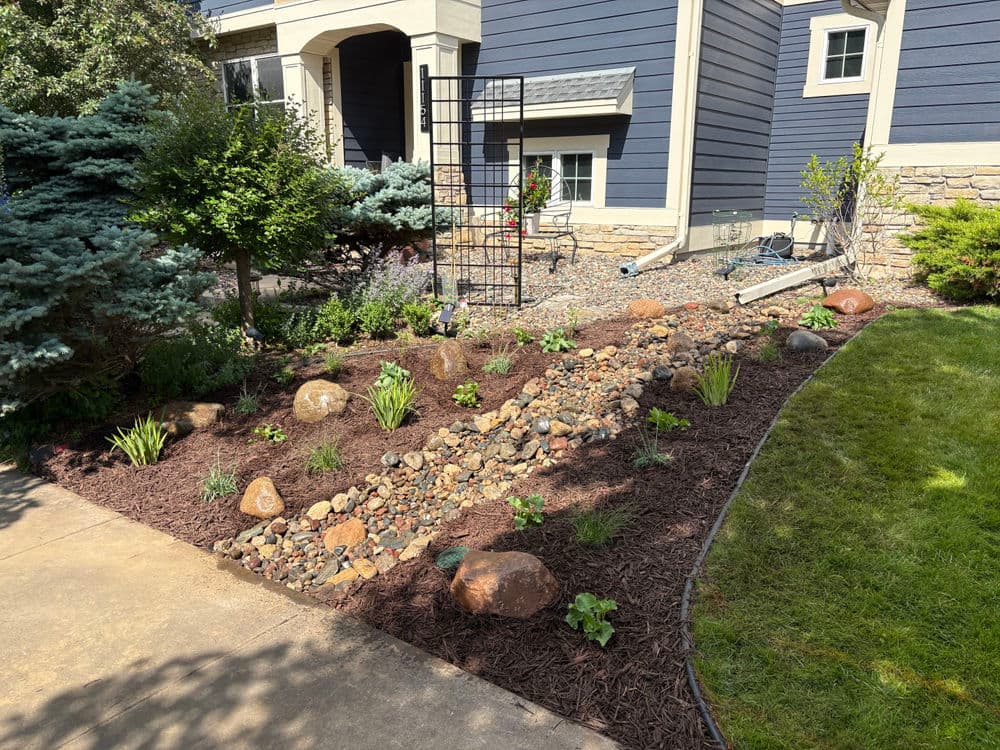
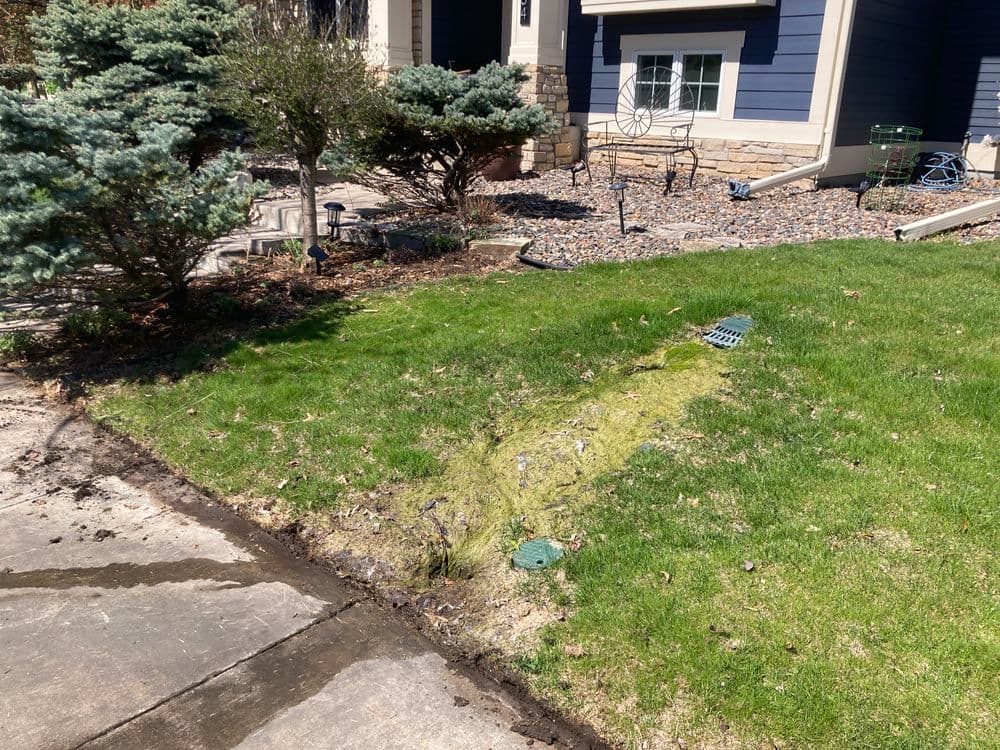
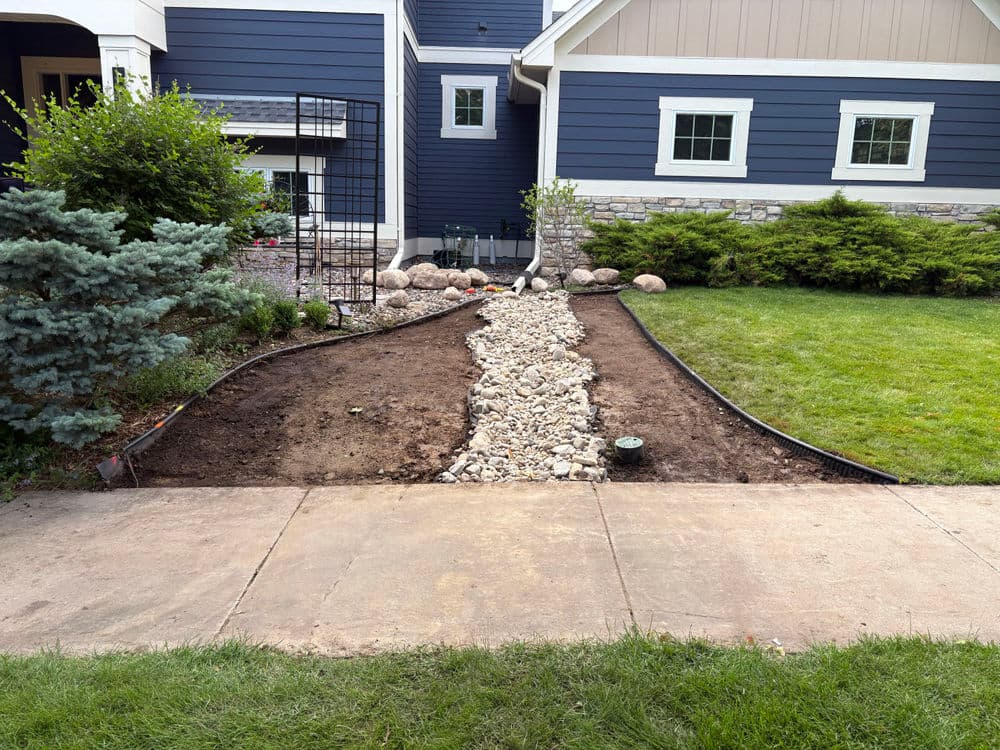
We started this project by stripping out all the existing ground cover and vegetation, then shaped the bed and ran new vinyl edging along the right perimeter. The dry creek bed came together using river rock set over separation fabric and here's something worth knowing about that fabric - Its main job is to keep the decorative rock from slowly migrating down into the soil below with the added advantage of helping control weeds.
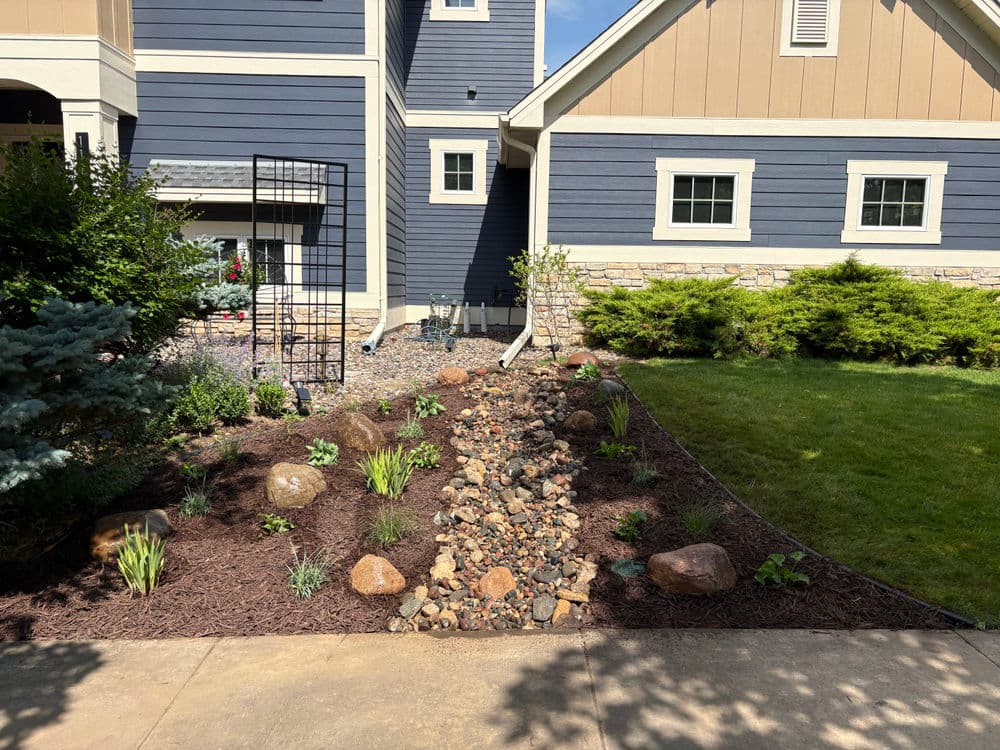
The rest of the bed got filled with custom brown mulch and planted out with a solid mix of native and moisture-tolerant plants. We went with Blue Iris, Swamp Milkweed, Blue Sedge Carex, Marsh Marigold, Prairie Dropseed, and Creeping Jenny. These aren't just filler plants - every one of them is well-suited for the wet-to-moderate conditions in a Woodbury yard like this one. They'll fill in naturally over the coming seasons and actually support local pollinators too.
The boulders scattered throughout the bed are doing real work here. They help anchor the mulch, break up the visual line of the creek channel, and give the whole bed a grounded, natural look. The creek itself runs from the lawn edge all the way up toward the existing rock near the foundation, tying the new bed into what was already there.
What started as a drainage problem spot is now one of the better-looking parts of this front yard. That's the goal with these kinds of installs - solve the functional issue and make it look intentional while you're at it.