Segmental Retaining Wall Replacement in River Falls
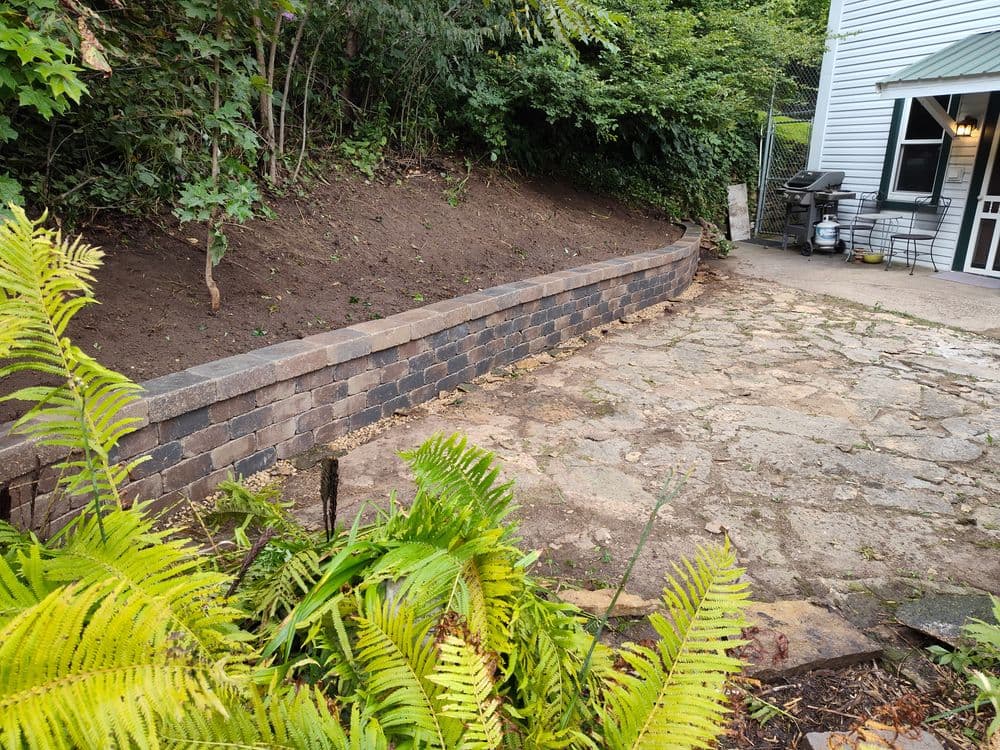
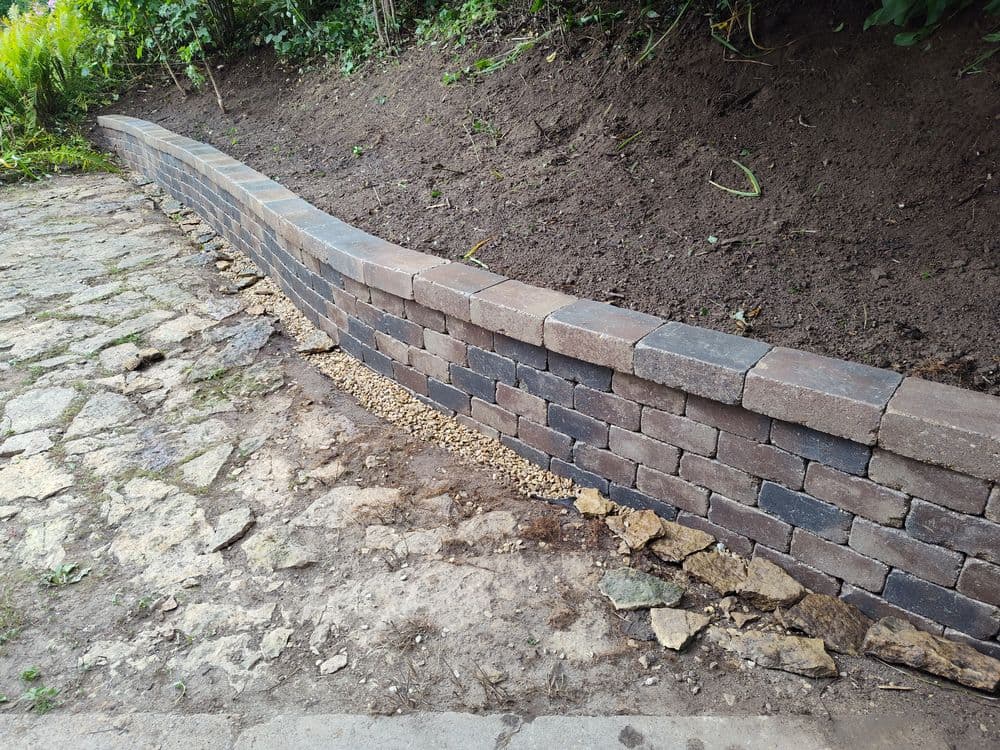
The old wall had run its course.
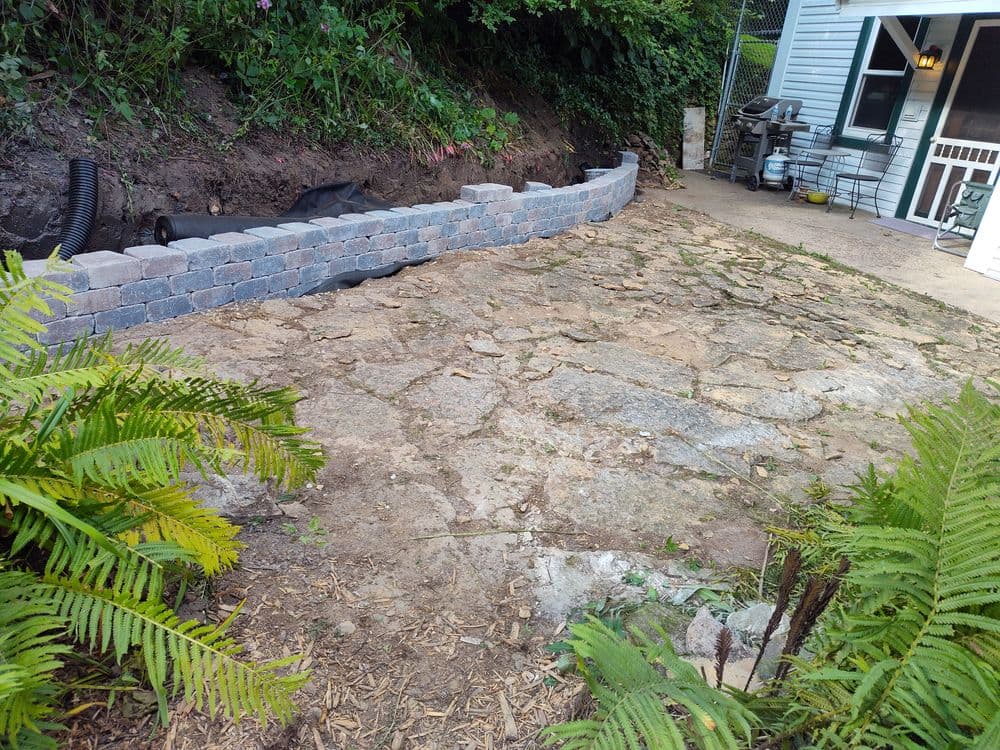
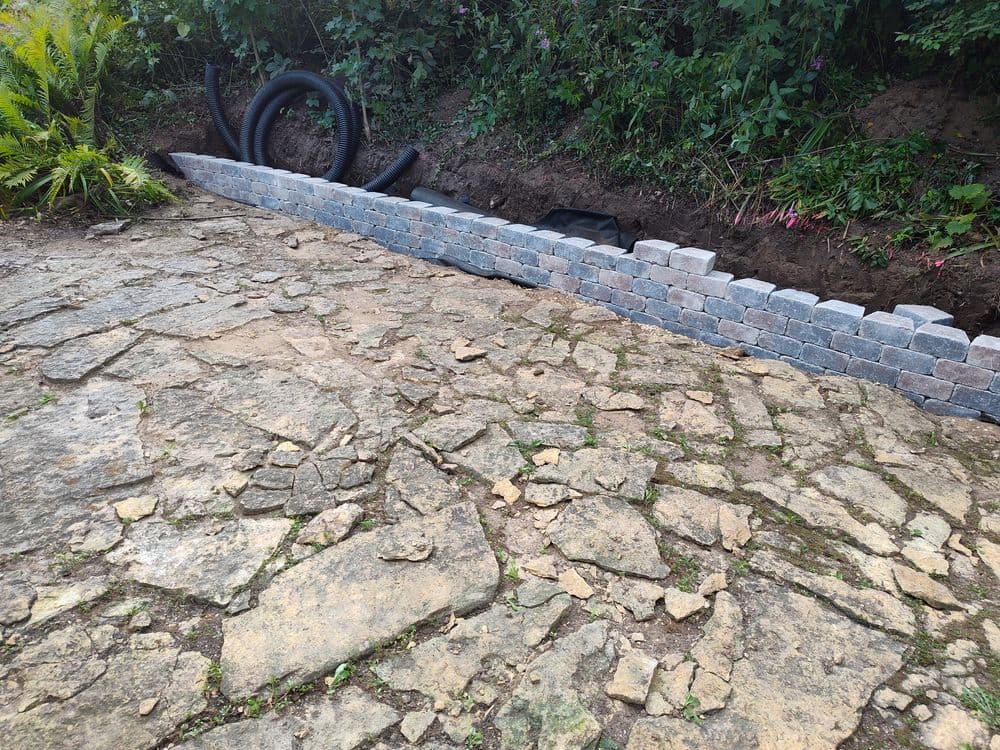
We tore out the old wall and started fresh. The base is 6 inches of 3/4" clear crushed limestone over geotextile reinforcement fabric - that's what keeps the whole thing from shifting over time. Above that, we ran a 1.5-foot drainage layer of the same clean limestone, with 4-inch drain tile sitting at the base. That tile daylights at the end of the wall, so water has somewhere to go instead of building up pressure behind the block.
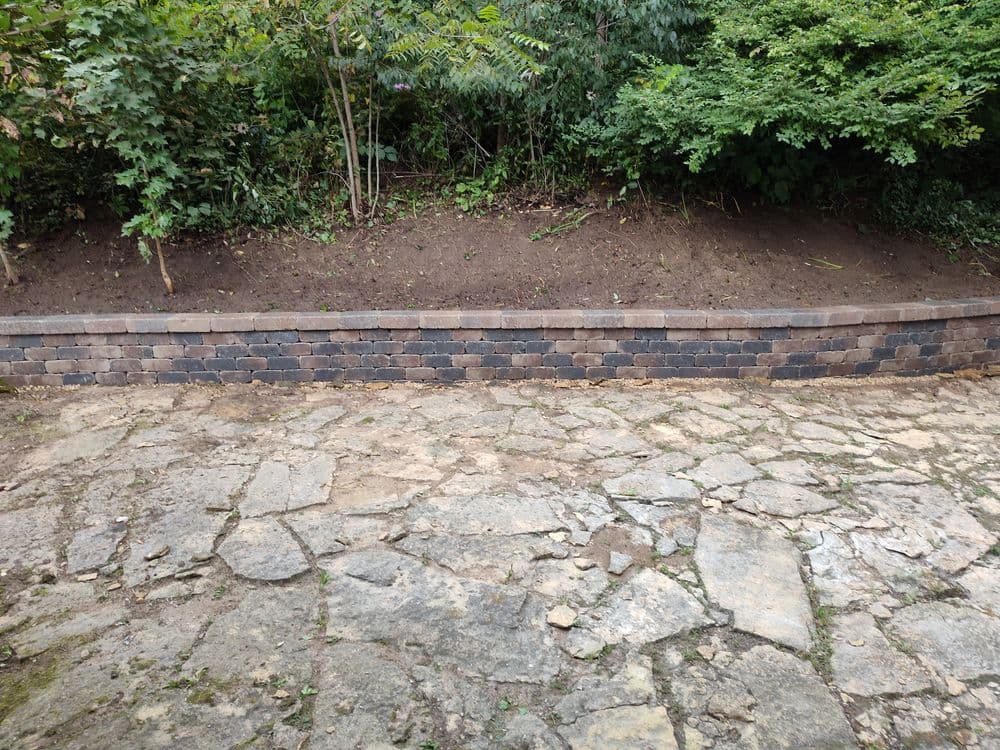
For the wall itself, we used Unilock Brussels Dimensional in Sierra color. It's a segmental concrete block system that gives you a clean, uniform look with a lot of structural integrity. No mortar needed - the blocks interlock and the drainage system handles the hydrostatic pressure that kills most retaining walls over time. The solid Brussels Dimensional block at the top course doubles as the coping, keeping the profile sharp and consistent all the way across.
The wall runs 35 feet and sits at 16 inches of exposed height - enough to hold back a meaningful grade change without overbuilding it. We backfilled behind the wall with more clean limestone to keep drainage moving, then topped it with the salvaged topsoil from the dig-out. That gives the homeowner a stable planting bed behind the wall when they're ready for it.
Drainage is the part of retaining wall work that most people never see, but it's the part that actually determines how long the wall lasts. Get it wrong and the wall fails in a few years. Get it right and you've got a structure that holds for decades.